top of page

WELCOME TO GLC — GAVIN LOTTERING CREATIONS

Welcome to GLC — Gavin Lottering Creations

This isn’t a business. It’s a blog.

GLC is where I explore ideas at the intersection of organic chemistry, design, sustainability, and curiosity. It’s a space for thinking out loud, chasing insights, and asking better questions — especially about how we use the materials that shape our world.

You’ll find posts on:

  • Organic and green chemistry (explained for non-chemists)

  • Biomaterials and sustainable alternatives

  • The chemistry of everyday things — and how they could be better

  • Experiments with AI tools, philosophy, and scientific learning

This is a solo project, rooted in self-study, creative thinking, and a belief that you don’t need a lab coat to care about the chemistry around you.

I’m Gavin Lottering — a designer, communicator, and lifelong learner. GLC has evolved many times, but right now, it’s focused on one goal: exploring how smarter materials and cleaner chemistry can help us build a better future.

Thanks for stopping by. Dig in, read something, and if you're curious — stay curious.


Introduction

Tetrachloroethylene, commonly known as perchloroethylene (PCE), is a chemical widely used in industrial applications such as dry cleaning and degreasing operations. While its utility is undeniable, it's crucial to understand how PCE interacts with the human body and the potential health risks associated with its exposure.


Metabolism of PCE in the Human Body

When PCE enters the body, primarily through inhalation or skin contact, it follows a specific metabolic pathway:

  1. Exhalation and Minimal Metabolism:

  • The majority of PCE is exhaled unchanged. However, a small fraction (about 1-3%) undergoes metabolism.

  1. Formation of Tetrachloroethylene Oxide:

  • The cytochrome P450 enzyme, specifically CYP2E1, metabolizes PCE into tetrachloroethylene oxide, an unstable epoxide intermediate.

  1. Isomerization to Trichloroacetyl Chloride:

  • Tetrachloroethylene oxide rapidly isomerizes to form trichloroacetyl chloride, a more reactive intermediate.

  1. Hydrolysis to Trichloroacetic Acid:

  • Trichloroacetyl chloride hydrolyzes in the presence of water to form trichloroacetic acid, which can then be excreted from the body.


Elimination of Metabolites

The body efficiently processes and eliminates these metabolites through:

  1. Renal Excretion:

  • Trichloroacetic acid is primarily excreted in the urine.

  1. Conjugation Reactions:

  • Reactive intermediates are neutralized by conjugation with glucuronic acid or glutathione, making them more water-soluble for excretion.

  1. Biliary Excretion:

  • Some conjugated metabolites are excreted into the bile and eliminated through feces.
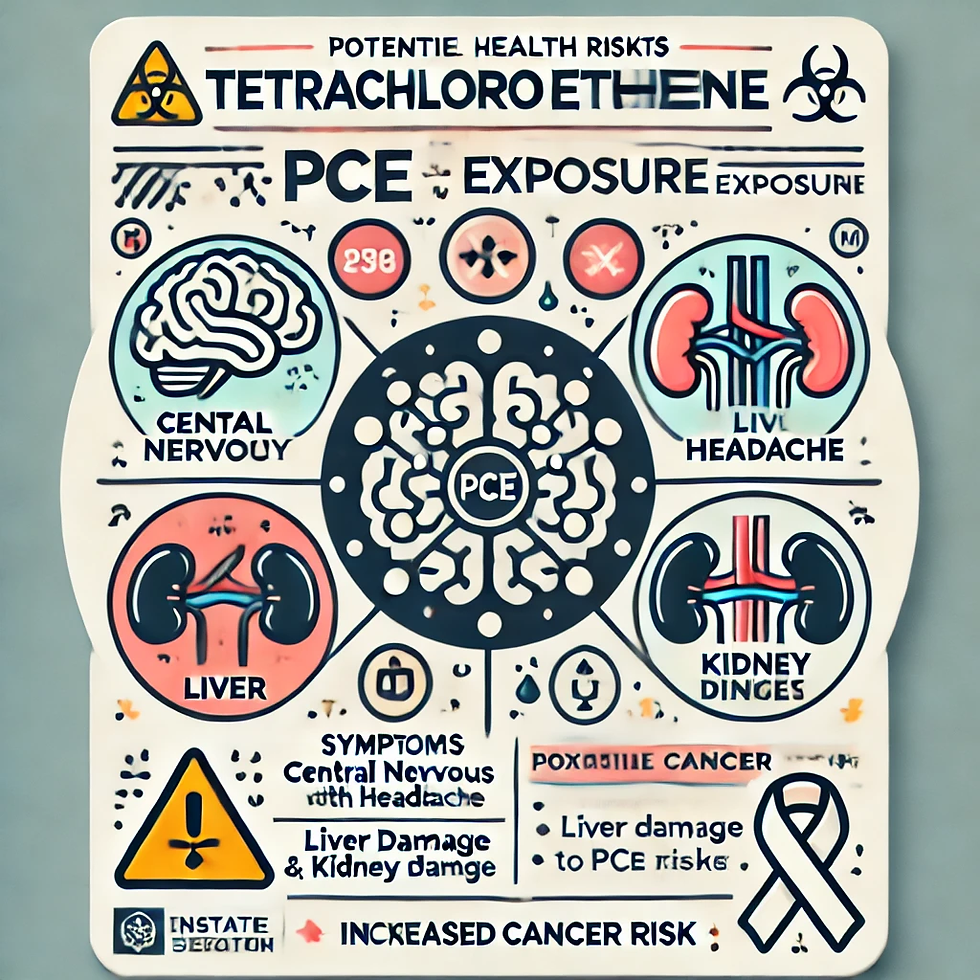

Risks of PCE Accumulation

If the body cannot effectively eliminate PCE, several adverse effects may occur:

  1. Acute Toxicity:

  • High levels of PCE can depress the central nervous system, leading to dizziness, headache, nausea, and in severe cases, loss of consciousness or coma.

  1. Chronic Toxicity:

  • Liver Damage: Prolonged exposure can result in liver damage due to the hepatotoxicity of reactive metabolites.

  • Kidney Damage: Chronic exposure can impair kidney function, potentially leading to kidney failure.

  • Carcinogenic Potential: PCE is classified as a potential human carcinogen, associated with an increased risk of certain cancers.

  • Neurotoxicity: Long-term exposure can lead to cognitive impairment, mood disturbances, and peripheral neuropathy.


Sources of PCE Ingestion

PCE can be ingested through various environmental and occupational sources:

  1. Contaminated Drinking Water:

  • PCE can leach into groundwater and surface water, leading to ingestion through contaminated drinking water supplies.

  1. Soil Contamination:

  • PCE can contaminate soil near industrial areas, with potential migration to groundwater and uptake by crops.

  1. Dry Cleaning Residue:

  • Residue from dry-cleaned clothes can transfer to the skin or air, leading to indirect ingestion.

  1. Household Products:

  • Products such as spot removers, adhesives, and degreasers containing PCE can lead to accidental ingestion.

  1. Food Packaging and Contaminated Food:

  • PCE can migrate from contaminated packaging materials into food, and crops grown in contaminated soil can absorb PCE, leading to ingestion.


Preventive Measures

To mitigate the risks associated with PCE exposure:

  • Ensure Safe Drinking Water: Regularly test and treat drinking water sources to detect and remove PCE contamination.

  • Regulate Industrial Practices: Implement stringent regulations and best practices for the use, handling, and disposal of PCE.

  • Personal Protective Equipment (PPE): Ensure workers use appropriate PPE and follow hygiene practices.

  • Monitor Food Sources: Regularly test food and packaging materials for PCE contamination.


Conclusion

Understanding the metabolic pathway and potential health risks of PCE is crucial for developing effective safety protocols and regulatory measures. By taking proactive steps to monitor and control PCE exposure, we can protect human health and ensure safer industrial and environmental practices.


In the ever-evolving world of marketing, understanding the unique characteristics and preferences of different consumer bases is crucial. Around the globe, passionate and dedicated groups of consumers, often referred to as "diehards" or "fandoms," shape the market dynamics for food and cosmetics. Each region has its own distinct fanbases driven by local tastes, traditions, and trends. Let's dive into these fascinating fandoms and see what makes each area special.


North America

Food Diehards & Fandom: Health EnthusiastsIn North America, there is a growing movement towards health-conscious and sustainable eating. The diehard food enthusiasts in this region are passionate about organic, non-GMO, and sustainably sourced foods. They are dedicated to finding products that promote wellness and environmental responsibility, driving demand for superfoods, plant-based diets, and eco-friendly packaging.

Cosmetics Diehards & Fandom: Clean Beauty AdvocatesWhen it comes to cosmetics, North American consumers are leading the charge for clean beauty. These diehard advocates are committed to natural and cruelty-free products. They prioritize transparency and ethical production practices, supporting brands that offer safe, non-toxic, and environmentally friendly beauty solutions.


South America

Food Diehards & Fandom: TraditionalistsIn South America, the culinary scene is deeply rooted in tradition and local flavors. The diehard food enthusiasts here celebrate regional dishes and native ingredients, often passed down through generations. This passionate fandom values authenticity and cultural heritage, driving the market for traditional, flavorful, and locally-sourced foods.

Cosmetics Diehards & Fandom: Bold Beauty EnthusiastsSouth American beauty enthusiasts are known for their love of vibrant colors and bold styles. This fandom embraces expressive and innovative makeup trends, often featuring bright hues and striking looks. They are loyal to brands that provide products allowing for creativity and self-expression.


Asia

Food Diehards & Fandom: Street Food AficionadosAsia is renowned for its dynamic street food culture. The diehard food fans in this region are enthusiastic about diverse and adventurous culinary experiences. From bustling street food stalls to fusion cuisine, this fandom thrives on variety and innovation, making Asia a hotbed for exciting food trends.

Cosmetics Diehards & Fandom: K-Beauty DevoteesAsian beauty enthusiasts, particularly in South Korea, are at the forefront of skincare and beauty innovation. Known as K-Beauty devotees, this fandom is dedicated to advanced skincare routines and cutting-edge beauty technologies. They are passionate about achieving flawless skin and are always on the lookout for the latest beauty breakthroughs.


Africa

Food Diehards & Fandom: Indigenous Food ChampionsIn Africa, the culinary scene is characterized by the use of indigenous ingredients and fresh produce. Diehard food enthusiasts in this region value native herbs, spices, and traditional cooking methods. This fandom is committed to preserving and celebrating local culinary heritage, driving demand for authentic and natural food products.

Cosmetics Diehards & Fandom: Herbal Remedy BelieversAfrican beauty enthusiasts often turn to natural remedies and herbal solutions for their skincare needs. This dedicated fandom believes in the power of traditional knowledge and natural ingredients. They are loyal to products that offer herbal and holistic beauty solutions, reflecting a deep connection to nature and tradition.


Europe

Food Diehards & Fandom: Gourmet ConnoisseursEuropean consumers are known for their sophisticated palate and appreciation for high-quality food. The diehard food fans in this region are gourmet connoisseurs who seek out organic, artisanal, and gourmet products. They value authenticity, taste, and quality, making Europe a hub for premium food experiences.

Cosmetics Diehards & Fandom: Eco-Luxury SeekersIn the realm of cosmetics, European beauty enthusiasts combine a love for luxury with a commitment to sustainability. This fandom is dedicated to eco-friendly and ethically sourced beauty products. They seek high-end brands that prioritize environmental responsibility, driving the demand for luxurious yet sustainable beauty solutions.


Conclusion

Exploring these global fandoms reveals the diverse and dynamic nature of consumer preferences around the world. Each region has its own unique diehard fans who shape the market trends for food and cosmetics. By understanding these passionate consumer bases, brands can tailor their marketing strategies to resonate deeply with their target audiences, fostering strong brand loyalty and advocacy. Which regional fandom resonates with you the most? Share your thoughts in the comments below!


Explore our graphicsĀ to see these diehard consumer bases in action:

  • North America: Health Enthusiasts & Clean Beauty Advocates

  • South America: Traditionalists & Bold Beauty Enthusiasts

  • Asia: Street Food Aficionados & K-Beauty Devotees

  • Africa: Indigenous Food Champions & Herbal Remedy Believers

  • Europe: Gourmet Connoisseurs & Eco-Luxury Seekers


In today's world, sustainability has become a crucial focus as we seek alternatives to reduce our environmental footprint. One significant area of interest is the replacement of synthetic plastics with natural polymers. These natural materials have been used for centuries and continue to provide eco-friendly solutions for a variety of applications. In this blog post, we'll explore an extensive list of natural polymers, their uses, and their sustainability.

Boxwood (Buxus)

  • Uses: Musical instruments, chess pieces, engravings.

  • Learn more: Boxwood

  • Details: Boxwood is known for its fine grain and density, making it ideal for detailed carvings and precision instruments.

Cotton (Gossypium)

  • Uses: Textiles, clothing, paper.

  • Learn more: Cotton

  • Details: Cotton fibers are soft and breathable, making them perfect for fabrics and garments. Cotton is also used in the production of paper and medical supplies.

Flax (Linum usitatissimum)

  • Uses: Linen fabrics, ropes, linseed oil.

  • Learn more: Flax

  • Details: Flax fibers are strong and durable, used for making linen fabrics and ropes. Linseed oil, derived from flax seeds, is used in paints and varnishes.

Hemp (Cannabis sativa)

  • Uses: Ropes, sails, textiles, paper.

  • Learn more: Hemp

  • Details: Hemp is a versatile plant used for textiles, ropes, and even paper. It requires minimal pesticides and has a low environmental impact.

Rubber Tree (Hevea brasiliensis)

  • Uses: Natural rubber, waterproof clothing, tires.

  • Learn more: Hevea brasiliensis

  • Details: Natural rubber from the rubber tree is essential for making products like tires, shoes, and waterproof clothing. It is biodegradable and renewable.

Pine (Pinus)

  • Uses: Rosin (adhesives, varnishes), timber, turpentine.

  • Learn more: Pine

  • Details: Pine trees produce rosin, used in adhesives and varnishes, and turpentine, used as a solvent. Pine timber is widely used in construction and furniture.

Potato (Solanum tuberosum)

  • Uses: Starch for adhesives, biodegradable packaging.

  • Learn more: Potato

  • Details: Potato starch is used in adhesives and as a biodegradable packaging material. It is an eco-friendly alternative to petrochemical-based plastics.

Corn (Zea mays)

  • Uses: Starch for adhesives, biodegradable packaging, ethanol production.

  • Learn more: Corn

  • Details: Corn starch is widely used in biodegradable plastics and packaging. Corn is also a source of ethanol, a renewable fuel.

Lac (Laccifer lacca)

  • Uses: Shellac for varnishes, sealants, electrical insulators.

  • Learn more: Shellac

  • Details: Shellac, derived from the secretion of lac bugs, is used as a natural varnish and sealant. It is also used in electrical insulators and food coatings.

Bamboo (Bambusoideae)

  • Uses: Building materials, textiles, paper.

  • Learn more: Bamboo

  • Details: Bamboo is a fast-growing plant used in construction, textiles, and paper. It is highly renewable and has a low environmental impact.

Sugarcane (Saccharum officinarum)

  • Uses: Bagasse for paper, biodegradable packaging.

  • Learn more: Sugarcane

  • Details: Bagasse, the fibrous residue from sugarcane, is used to produce paper and biodegradable packaging materials.

Cork Oak (Quercus suber)

  • Uses: Cork for bottle stoppers, flooring, insulation.

  • Learn more: Cork Oak

  • Details: Cork from the cork oak tree is used in bottle stoppers, flooring, and insulation. It is harvested sustainably without harming the tree.

Jute (Corchorus)

  • Uses: Burlap, hessian cloth, ropes.

  • Learn more: Jute

  • Details: Jute fibers are used to make burlap, hessian cloth, and ropes. It is biodegradable and has a low environmental impact.

Soybean (Glycine max)

  • Uses: Soy-based plastics, adhesives, coatings.

  • Learn more: Soybean

  • Details: Soybeans are used to produce bio-based plastics, adhesives, and coatings. They are a renewable resource with diverse applications.

Kenaf (Hibiscus cannabinus)

  • Uses: Paper, textiles, biocomposites.

  • Learn more: Kenaf

  • Details: Kenaf fibers are used in the production of paper, textiles, and biocomposites. It is a fast-growing and sustainable crop.

Coconut (Cocos nucifera)

  • Uses: Coir for ropes, mats, brushes.

  • Learn more: Coconut

  • Details: Coir, derived from coconut husks, is used for making ropes, mats, and brushes. It is a durable and renewable material.

Agave (Agave spp.)

  • Uses: Fibers for ropes, textiles, paper.

  • Learn more: Agave

  • Details: Agave fibers are strong and used in ropes, textiles, and paper. The plant is drought-resistant and sustainable.

Papyrus (Cyperus papyrus)

  • Uses: Ancient paper-like material.

  • Learn more: Papyrus

  • Details: Papyrus was historically used as a writing material in ancient Egypt. It is made from the pith of the papyrus plant.

Wheat (Triticum)

  • Uses: Straw for baskets, hats, biodegradable packaging.

  • Learn more: Wheat

  • Details: Wheat straw is used for making baskets, hats, and biodegradable packaging. It is a byproduct of wheat cultivation.

Rice (Oryza sativa)

  • Uses: Rice husk for particle board, biodegradable packaging.

  • Learn more: Rice

  • Details: Rice husks are used to produce particle board and biodegradable packaging. They are a renewable and sustainable material.

Millet (Panicum miliaceum)

  • Uses: Fibers for textiles and baskets.

  • Learn more: Millet

  • Details: Millet fibers are used in textiles and basket making. The plant is drought-resistant and sustainable.

Banana (Musa spp.)

  • Uses: Banana fibers for textiles, paper, biodegradable packaging.

  • Learn more: Banana

  • Details: Banana fibers are used in textiles, paper, and biodegradable packaging. They are strong, renewable, and eco-friendly.

Teak (Tectona grandis)

  • Uses: Durable timber for shipbuilding, furniture.

  • Learn more: Teak

  • Details: Teak wood is highly durable and resistant to decay, making it ideal for shipbuilding and high-quality furniture.

Palm (Arecaceae)

  • Uses: Palm leaves for thatching, baskets, mats.

  • Learn more: Palm

  • Details: Palm leaves are used for thatching roofs, making baskets, and weaving mats. They are a renewable and versatile material.

Rattan (Calamus rotang)

  • Uses: Furniture, baskets, canes.

  • Learn more: Rattan

  • Details: Rattan is used to make furniture, baskets, and canes. It is flexible, durable, and sustainable.

Sisal (Agave sisalana)

  • Uses: Ropes, twine, mats.

  • Learn more: Sisal

  • Details: Sisal fibers are used in making ropes, twine, and mats. The plant is hardy and grows well in arid regions.

Abaca (Musa textilis)

  • Uses: Ropes, tea bags, banknotes.

  • Learn more: Abaca

  • Details: Abaca fibers are strong and durable, used in ropes, tea bags, and even banknotes. It is a sustainable crop.

Ramie (Boehmeria nivea)

  • Uses: Textiles, ropes, fishing nets.

  • Learn more: Ramie

  • Details: Ramie fibers are used in textiles, ropes, and fishing nets. They are one of the strongest natural fibers and highly sustainable.

Kapok (Ceiba pentandra)

  • Uses: Stuffing for mattresses, life jackets, insulation.

  • Learn more: Kapok

  • Details: Kapok fibers are used for stuffing in mattresses and life jackets, and as insulation. They are lightweight and water-resistant.

Gutta-percha (Palaquium)

  • Uses: Insulation for underwater cables, golf balls, dental applications.

  • Learn more: Gutta-percha

  • Details: Gutta-percha is a latex material used for insulating underwater cables, making golf balls, and in dental applications.

Tung Tree (Vernicia fordii)

  • Uses: Tung oil for varnishes, paints, waterproofing.

  • Learn more: Tung oil

  • Details: Tung oil is derived from the seeds of the tung tree and used in varnishes, paints, and waterproofing materials.

Indigo (Indigofera)

  • Uses: Natural dye for textiles.

  • Learn more: Indigo dye

  • Details: Indigo is a natural dye used in textiles, famous for its deep blue color. It is one of the oldest dyes known to humanity.

Eucalyptus (Eucalyptus)

  • Uses: Timber, essential oils, paper.

  • Learn more: Eucalyptus

  • Details: Eucalyptus trees are used for timber, producing essential oils, and making paper. They grow quickly and are highly renewable.

Cottonwood (Populus)

  • Uses: Timber, paper, plywood.

  • Learn more: Cottonwood

  • Details: Cottonwood trees provide timber, are used in paper production, and for making plywood. They are fast-growing and sustainable.

Sustainability and the Future

Natural polymers offer sustainable alternatives to synthetic plastics, which are derived from non-renewable fossil fuels and pose significant environmental challenges. By embracing materials sourced from plants, we can reduce our carbon footprint, support biodiversity, and promote a healthier planet.

Many of these natural polymers are already being utilized in modern applications, and with continued research and technological advancements, their potential uses are expanding. Sustainable farming practices, certification programs, and consumer demand for eco-friendly products are driving the growth of natural polymers in the market.

Conclusion

The journey towards sustainability involves revisiting traditional materials and leveraging their eco-friendly properties for contemporary applications. By understanding and utilizing natural polymers, we can move towards a more sustainable and environmentally conscious future.

For more detailed information, please visit the provided Wikipedia links and explore the fascinating world of natural polymers.

This comprehensive blog post provides a detailed overview of various natural polymers, their uses, and their sustainability. Feel free to adapt and use this content for your blog or other informational purposes.

©2025 by gavinlotteringcreations. Created with Wix.com

bottom of page