top of page

WELCOME TO GLC — GAVIN LOTTERING CREATIONS

Welcome to GLC — Gavin Lottering Creations

This isn’t a business. It’s a blog.

GLC is where I explore ideas at the intersection of organic chemistry, design, sustainability, and curiosity. It’s a space for thinking out loud, chasing insights, and asking better questions — especially about how we use the materials that shape our world.

You’ll find posts on:

  • Organic and green chemistry (explained for non-chemists)

  • Biomaterials and sustainable alternatives

  • The chemistry of everyday things — and how they could be better

  • Experiments with AI tools, philosophy, and scientific learning

This is a solo project, rooted in self-study, creative thinking, and a belief that you don’t need a lab coat to care about the chemistry around you.

I’m Gavin Lottering — a designer, communicator, and lifelong learner. GLC has evolved many times, but right now, it’s focused on one goal: exploring how smarter materials and cleaner chemistry can help us build a better future.

Thanks for stopping by. Dig in, read something, and if you're curious — stay curious.


In the ongoing conversation about environmental conservation, the focus often shifts toward visible issues like deforestation, climate change, and wildlife poaching. However, a more insidious threat looms large in the shadows—chemical pollutants. Among these, Persistent Organic Pollutants (POPs) such as PFAS (Per- and Polyfluoroalkyl Substances), often referred to as "forever chemicals," play a particularly destructive role in disrupting ecosystems and increasing the background extinction rate of species.

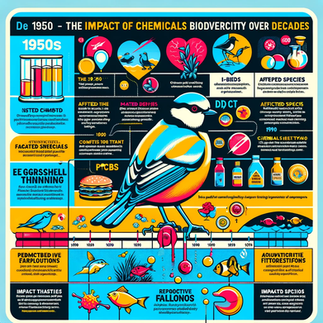
A Historical Perspective on Chemicals and Biodiversity Loss

Since the 1950s, several chemicals have been identified as significant contributors to the decline in global biodiversity. Here’s a brief overview:

  • 1950s: DDT (pesticide): Once hailed as a miracle chemical for its efficacy in pest control, DDT was later found to cause eggshell thinning in birds of prey, pushing many species to the brink of extinction.

  • 1960s: PCBs (industrial chemicals): Used widely in electrical equipment and other applications, PCBs led to reproductive failures and cancer in aquatic life, notably affecting species like the Beluga whale.

  • 1970s: Lead (additives): Found in ammunition and gasoline, lead poisoning had devastating effects on birds and mammals, causing severe population declines.

  • 1980s: CFCs (aerosols): These chemicals contributed to ozone depletion, which increased UV radiation, causing higher mutation rates and reduced plankton populations—vital to aquatic food chains.

  • 1990s: Glyphosate (herbicide): Its extensive use has led to a decrease in milkweed populations, critical for the survival of Monarch butterflies.

  • 2000s: Neonicotinoids (pesticides): Linked to Colony Collapse Disorder in bees, these chemicals have significantly impacted pollinator populations, affecting global agriculture.

  • 2010s: Plastic pollutants: The ubiquity of plastics has led to ingestion and entanglement issues among marine species, contributing to high mortality rates.

The Role of PFAS: A Modern Concern

PFAS are particularly troubling due to their incredible resistance to breaking down in the environment. Found in products from non-stick pans to firefighting foams, these chemicals accumulate in the bodies of animals and humans, leading to a host of health issues, including cancer and thyroid disease. The impact on wildlife ranges from altered reproductive cycles in fish to compromised immune systems in marine mammals.

Citizen Science: A Tool for Change

In response to these challenges, the development of citizen science projects has emerged as a crucial element in tracking and combating the effects of these chemicals. New technologies and mobile apps now empower ordinary citizens to record and share data on environmental observations. This democratization of data collection is not only increasing awareness but also enhancing the scope of scientific research.

The Road Ahead

The fight against pollution is multi-faceted, requiring cooperation across international borders, sectors, and disciplines. Legislation and regulation play key roles, but so does public awareness and education. By understanding the past and recognizing the ongoing impacts of these chemicals, society can forge a path toward reducing future harm and preserving the planet’s biodiversity.

Through education, advocacy, and the harnessing of technology, we can make significant strides in mitigating the impact of these persistent chemicals. The time to act is now, to ensure a healthier, more biodiverse world for future generations.

Diagram depicting ion mechanistic ion channels used for the sense:


Ion channels are integral components of our cells, serving as gateways for ions such as potassium, calcium, sodium, and chloride. These microscopic structures play a crucial role in a wide range of bodily functions, from transmitting nerve signals and contracting muscles to maintaining the heartbeat and regulating fluid balance in tissues. Given their importance, understanding how to support ion channel function is essential for overall health and well-being.

What Are Ion Channels?

Ion channels are protein structures embedded in the cell membrane that regulate the flow of ions in and out of cells. This flow is critical for generating electrical signals necessary for various cellular processes, including communication between nerve cells, muscle contraction, and the secretion of hormones. Dysfunction in ion channels can lead to a variety of medical conditions, known collectively as channelopathies, which can affect the nervous system, muscles, and heart.

How Ion Channels Influence Health

Ion channels are not just cellular components; they are dynamic entities that respond to the body's needs and the external environment. For example, in neurons, ion channels help generate action potentials (the electrical impulses that neurons use to communicate), influencing everything from muscle contractions to thought processes and emotions. In the heart, ion channels play a role in maintaining the rhythm and strength of heartbeats. Thus, optimal functioning of ion channels is synonymous with good health.

Supporting Healthy Ion Channel Function

To ensure that ion channels function properly, several lifestyle and dietary factors should be considered:

Balanced Diet

  • Mineral Intake: A diet rich in key minerals that facilitate ion channel function is crucial. Potassium and calcium, for instance, help in maintaining cellular electrical balance and are vital for nerve transmission and muscle health.

  • Nutrient-Rich Foods: Incorporate a variety of fruits, vegetables, whole grains, and lean proteins to support overall cellular health.

Adequate Hydration

  • Fluid Balance: Keeping hydrated helps maintain ion concentration and supports the function of ion channels. This is particularly important for nerve function and muscle contraction.

Stress Management

  • Neural Regulation: Chronic stress can alter the functioning of ion channels, especially those in the brain and heart. Techniques such as meditation, yoga, and regular exercise can help manage stress effectively.

Avoiding Toxins

  • Substance Avoidance: Exposure to toxins such as heavy metals and certain drugs can interfere with ion channel function. Limiting exposure to these substances can help maintain cellular health.

Diagram depicting healthy ion channel lifestyle:


Research and Advances

Advancements in medical research continue to uncover the intricate roles of ion channels and their impact on health. These discoveries lead to better treatments for diseases associated with ion channel dysfunction, such as epilepsy, cystic fibrosis, and arrhythmias. Furthermore, novel therapies that target specific ion channels are being developed, offering hope for more effective and targeted treatments.

Conclusion

The health of our ion channels is a critical aspect of our overall well-being. By understanding the roles these cellular gatekeepers play and how to support their function through lifestyle and diet, we can better manage our health and improve our quality of life. As science advances, the potential to tailor treatments to individual ion channel profiles may become a reality, ushering in a new era of personalized medicine based on the molecular mechanisms that underlie health and disease.

Understanding and supporting the function of ion channels is not just about managing diseases—it's about fostering a vibrant, healthy life at the most fundamental level of our biology.

The human brain, a complex and enigmatic organ, orchestrates our thoughts, emotions, and actions through an intricate symphony of electrical impulses. These impulses generate bioelectromagnetic waves, commonly known as brain waves, which play a crucial role in our cognitive and emotional well-being. In this post, we will explore the different types of brain waves, the specific brain regions involved, and the key electrolytes that influence these waves, providing insights that are not only fascinating but also potentially transformative for understanding and improving mental health.


The Spectrum of Brain Waves

Brain waves are differentiated based on their frequency, each associated with various states of brain functioning:

  • Delta Waves (0.5–4 Hz): These are the slowest waves, typically occurring during deep sleep, and are crucial for restorative sleep and healing.

  • Theta Waves (4–8 Hz): These waves are present during light sleep, meditation, and creativity. They bridge the conscious and subconscious layers of the mind.

  • Alpha Waves (8–12 Hz): Seen during relaxed states, especially when the eyes are closed, alpha waves help in reducing stress and boosting creativity.

  • Beta Waves (12–30 Hz): The fast waves that are dominant during our waking states of consciousness, involved in active thinking, problem-solving, and decision-making.

  • Gamma Waves (over 30 Hz): The fastest of the brain waves, gamma waves are related to high-level cognitive functioning and information processing.

Each type of wave has its unique signature and implications for our mental health, cognitive abilities, and overall brain function.


Brain Regions and Their Roles in Wave Generation

Understanding which parts of the brain are active during different brain wave states can help in pinpointing how various thoughts and activities impact our mental state:

  • Delta Waves are primarily generated in the thalamus and cortex, playing a key role in sleep regulation.

  • Theta Waves often emanate from the hippocampus, making them significant for memory processing.

  • Alpha Waves are abundant in the posterior regions of the brain during wakeful relaxation with closed eyes.

  • Beta Waves are distributed widely across the frontal and parietal lobes, where conscious thought and logical thinking occur.

  • Gamma Waves have been observed in virtually all parts of the brain, indicating their involvement in integrating information from various brain regions.


Electrolytes: The Conductors of Our Brain's Electrical Orchestra

Electrolytes such as sodium, potassium, calcium, and chloride are vital for the proper function of neurons, influencing the generation and modulation of brain waves:

  • Sodium and Potassium: Critical for the action potential in neurons, these electrolytes help in the rapid transmission of signals, influencing all types of brain waves.

  • Calcium: Plays a pivotal role in neurotransmitter release and is also integral in the formation of Theta and Gamma waves.

  • Chloride: Mainly involved in maintaining the cell's electric stability, influencing primarily Delta and Theta waves.

The balance of these electrolytes in the brain is crucial for maintaining optimal brain function and can be influenced by diet, hydration, and overall health.

Conclusion

The study of brain waves not only enhances our understanding of the brain's inner workings but also offers avenues for improving mental health and cognitive functions. Techniques like EEG (electroencephalography) and advances in neurofeedback have begun to harness the power of this knowledge, offering new ways to treat disorders, enhance learning abilities, and manage stress. By continuing to explore the electromagnetic patterns of our brain, we can unlock further secrets of this incredible organ.

This journey through the world of brain waves shows us just how dynamic and responsive our brains really are, adapting to thoughts, feelings, and external inputs with a complex yet beautifully orchestrated array of electrical activity. Understanding these processes at a deeper level could be the key to enhancing our mental, emotional, and neurological health.

©2025 by gavinlotteringcreations. Created with Wix.com

bottom of page